Live project · Türkiye

Two hours a day
became
twenty minutes.

The director of a manufacturing company approved every payment by hand: log in, find the row, click. Now he replies in WhatsApp and a program does the rest — on the client's server, unattended.

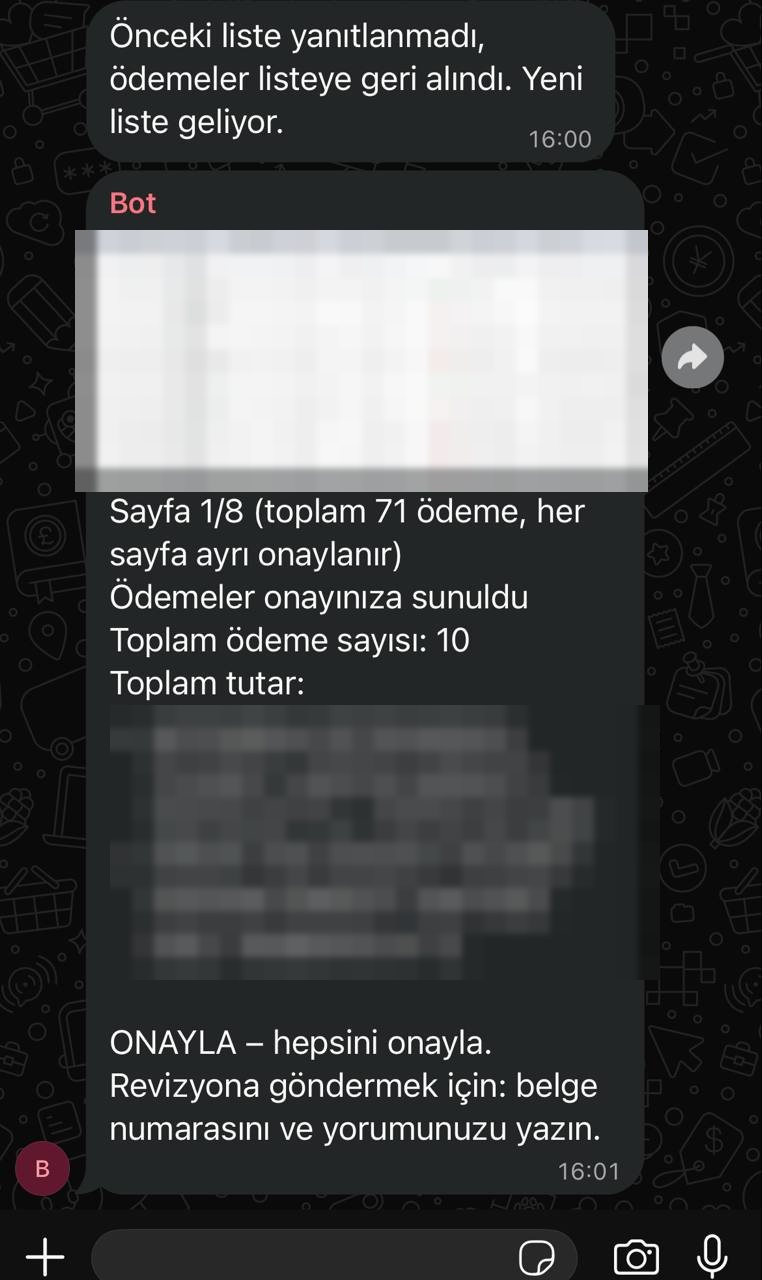
A request from a corporate system arrives as a message in a messenger and the decision goes back
71–85
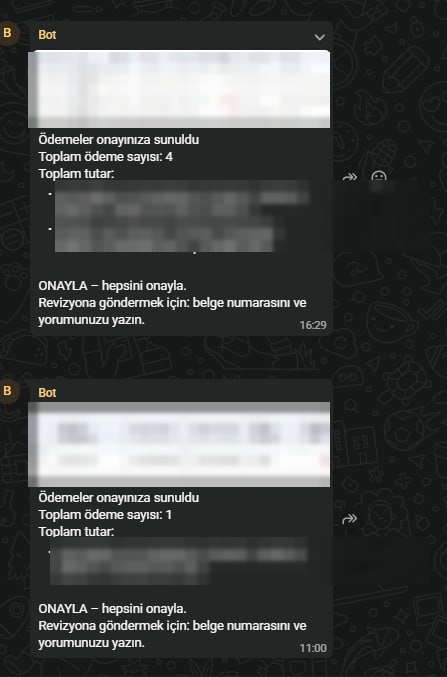
payments arrive in one run — the bot splits them into tables of ten
~20 sec
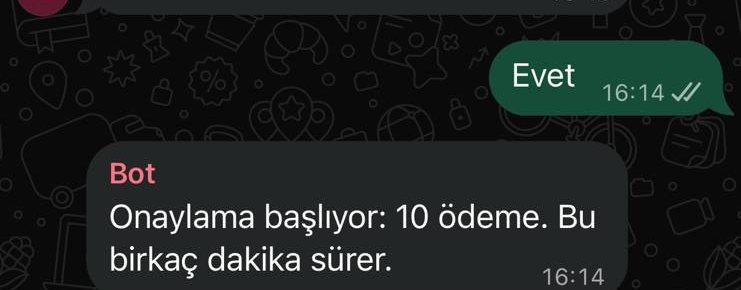
per payment: a batch of 24 clears in eight minutes, and the person is free the whole time
4352
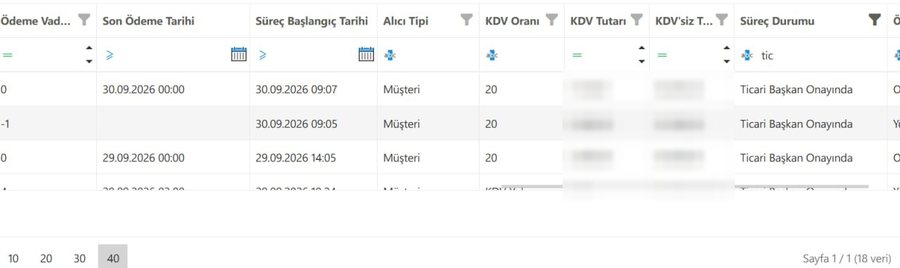
rows in the report — the right one is found by document number on any page
What was actually built

Payment approvals through a messenger

The corporate document system had no open access, and no built-in way to do this existed. So the program works inside it the way an employee does: opens sections, reads data, clicks buttons.

Before → after2–3 hours a day → about 20 minutes for the whole payment load
Cleared on first pass21 of 24 — the rest return to the queue and arrive in the next table, nothing is lost
Safety checkBulk approval needs a separate confirmation. A stray “ok” does not move money
Where it runsOn the client's server, around the clock, unattended. Delivered and paid in full in September 2026

Company names, amounts and document numbers are masked in the screenshots. Client data is not shown in a portfolio or anywhere else.

Full write-up

Three jobs I take on most often

Systems you “can't plug into”

When there is no open access, the program works in the interface the way an employee does: opens sections, reads data, clicks buttons. The project in Türkiye was built exactly like that — and it is the most common situation people write to me about.

Decisions where the person already is

A manager replies in WhatsApp or Telegram instead of opening a heavy system on a phone. A summary, an approval, a shipment status, a reminder — they arrive in the chat and go back into the system.

Bots and mini apps

Booking, reminders, selection, payment — inside Telegram or on a site. With an admin panel you edit yourself, without a developer and without a monthly fee for changes.

Four steps from a conversation to a working system

You don't pay for a promise. First you see it work on your own data.

  1. Process review

    Fifteen minutes. You describe what eats time every day. I say honestly whether it is worth automating yet. Free and with no obligation.

  2. Prototype on your data

    I build a working piece — not a deck, not a diagram. You see how it behaves at your company before the whole project is paid for.

  3. Rollout

    Installed on your server, inside your perimeter. Access stays with you and can be revoked at any moment. Documentation and clear logic stay behind.

  4. Support

    Processes change, so does the system. I adjust it as agreed. It is not tied to me: any developer can read it and extend it.

Aleksei, developer at AKU Automation
Who builds it

Aleksei. One person, not an agency

I review the process, write the code and put the system on the server myself. You talk directly to the person doing the work — no account manager to relay the task to.

  • Live project in Türkiye: delivered, paid for, running unattended
  • Work and correspondence in Russian, English and Turkish
  • I publish a free guide on working with AI — you can see how I think before you pay

What people usually ask

Question not on the list?

Describe in your own words what happens today. I'll answer straight, even if no project comes out of it.

Message on Telegram
What does it cost?

It depends on the process. I quote after the review, once it is clear how much work the task holds. Quoting blind means either padding the number or asking for more later. The review itself is free and commits you to nothing.

Our system has no API. Is that a dead end?

No, and it is the most common situation. The project in Türkiye was exactly that case: the system had no open access. The program works inside it the way an employee does: opens sections, finds the row, clicks buttons.

Will our data leave the company?

No. The solution is installed on your server and runs inside your perimeter. Access stays with you and can be revoked at any time. I don't show client data even in a portfolio — everything in the screenshots above is masked.

What if the program makes a mistake and processes the wrong thing?

Sensitive actions are never performed without a person's confirmation, and money has a second safeguard with a repeated confirmation. On an unclear reply the system asks again instead of guessing. If an action fails, it reports and stops rather than losing the task silently.

How long until there is a result?

A working prototype on your data takes one to two weeks. Full rollout depends on scope: the more precisely the process is described at the review, the more precise the estimate. I give dates after the review, not before.

What if the task can't be solved?

I'll say so at the review. If the process can't be automated, or the saving won't cover the work, I'll tell you and we stop there. That is more honest than taking the money and stalling halfway.


Free, no email required

Seven processes that quietly eat money in a small business

And what closes each of them. Ten minutes to read, with a table inside so you can run your own numbers. Delivered in Telegram, nothing to fill in.

Get the guide
Process review

Tell me what eats your time every day

Fifteen minutes of conversation. I'll go through the process and say plainly whether it is worth automating yet. If it isn't, I'll say so. It's free.